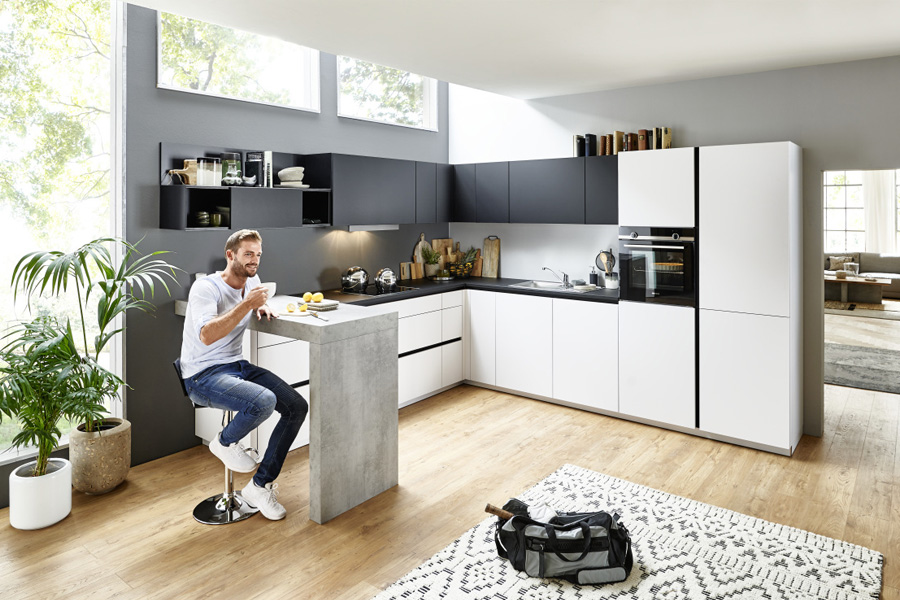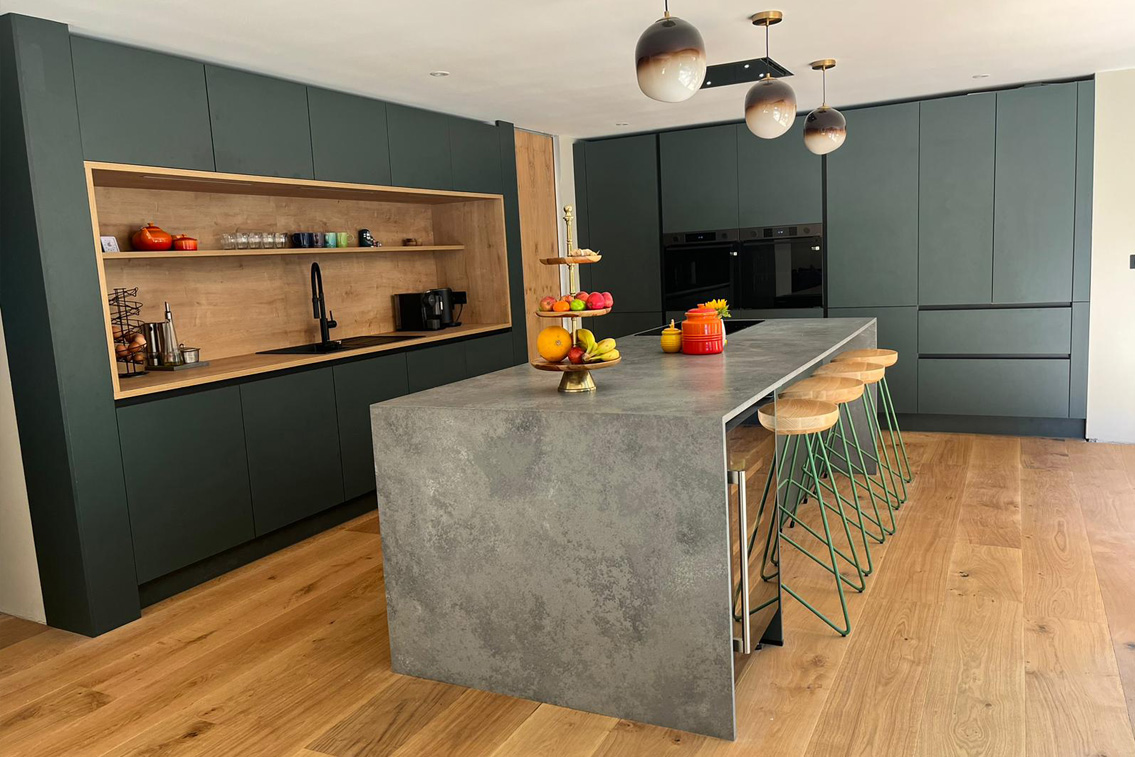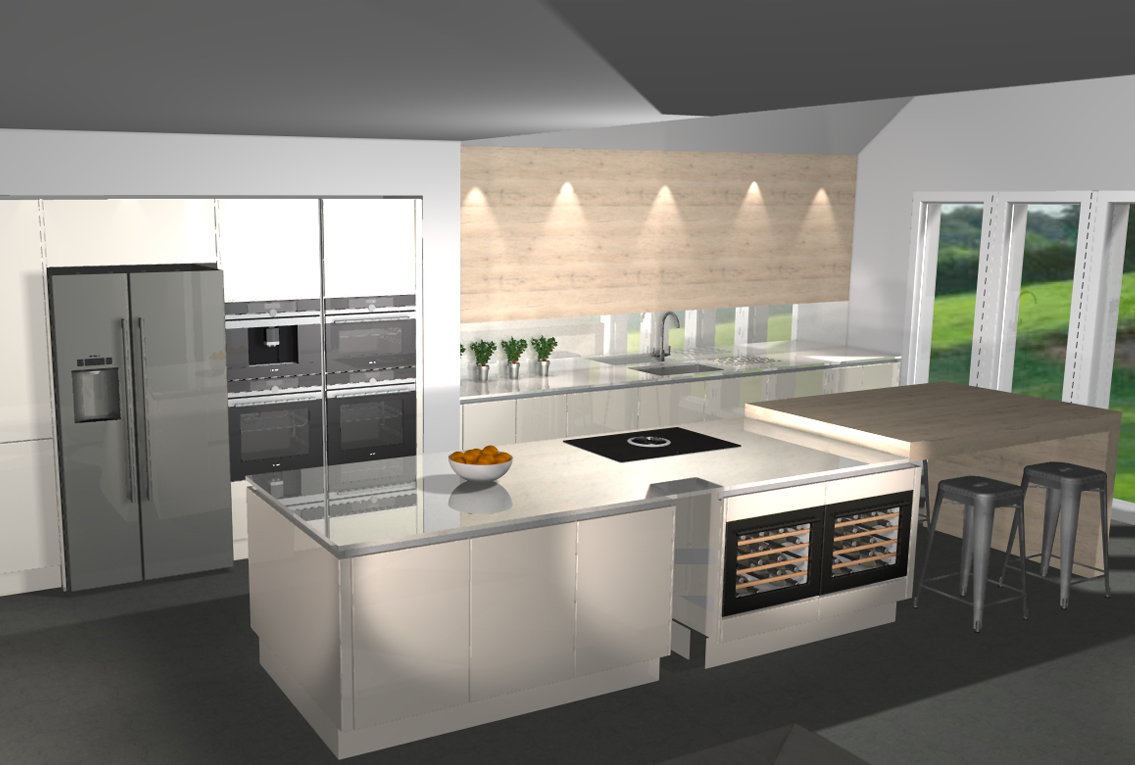



A wood veneer kitchen uses thin slices of real timber bonded to a stable core such as MDF or plywood, giving genuine grain and warmth without the cost of solid timber.
Wood veneer kitchens use ultra-thin slices of real wood, typically under a millimetre, bonded to an engineered core such as MDF or plywood for cabinet doors – showing genuine grain and colour variation so the kitchen reads as solid timber.
Solid wood doors are milled from a single piece or frame-and-panel construction: heavier, pricier and prone to movement with humidity. Veneer fronts are lighter, more stable and use far less timber, with the same durable substrate found in quality cabinets beneath the visible skin – well suited to slab-front kitchens, where wide, flat panels need to stay perfectly straight.
Solid wood offers tactile authenticity and room to refinish over decades, but costs more and moves with the seasons. For most kitchens, veneer strikes the better balance.
Logs are sliced into thin leaves using methods such as plain sawn, quarter cut or rotary cut, each producing a distinct grain pattern. A flitch – sequential leaves from the same log – lets designers book-match leaves for continuous patterns across doors, pressed under heat onto MDF or plywood cores with a balancing veneer on the reverse to stop bowing.
Veneer kitchens span a wide range of genuine species, from pale Scandi looks to dark, dramatic finishes. Light options such as oak, ash and birch suit minimalist kitchens and pair well with white or grey worktops, while walnut and smoked oak give a richer feel. Stains or lacquers shift tone from honey to espresso while still revealing the grain.
Core material, edge detailing and finish largely decide how durable – and premium – the cabinets feel. Moisture-resistant MDF suits most doors, while birch or poplar plywood is common in higher-end carcasses, with denser boards resisting sagging on wide drawers.
Solid wood lipping on door edges gives far better impact resistance than thin edge-banding. A quality lacquer forms a tough, easy-clean film, while oil-wax needs more upkeep but offers a tactile feel. Ask about veneer thickness and lacquer coats during a free kitchen design consultation before you commit.
A well-made veneer kitchen is durable, though performance depends on installation and everyday treatment, handling humidity better than large solid wood panels – much like the surfaces discussed in our guide to FENIX surfaces . Properly lacquered veneer resists normal scuffs, though deep scratches cut through more easily than solid timber, and standing water around sinks can cause swelling if unsealed. Pairing veneer with hardwearing worktops gives the best balance, and households with children or pets should prioritise robust lacquers and rounded edges.
Veneer kitchens sit between basic laminates and fully solid wood, often saving a meaningful sum on a full refit while keeping a premium appearance across our kitchen collections. Its stable construction means fewer swollen or twisted doors over time, and it suits large open-plan spaces with tall cabinetry, or a high-end look on a mid-range budget – though a single statement piece may still be worth building in solid timber.
Many striking kitchens blend wood veneer with super-matt laminates, painted doors, stone and metal – visible across several recent kitchen transformations. A common approach uses veneer on wall units for warmth, with tougher laminate on base cabinets – an approach that also suits handleless cabinetry particularly well. Warm oak with white matt laminate, or dark walnut with light grey cabinets, are reliable pairings, and vertical grain-matched veneer on tall housings gives a sleek, continuous feel.
Veneer kitchens are easy to live with: no special products required. Wipe with a soft, damp cloth following the grain, and dry splashes near sinks promptly. Use mild washing-up liquid for greasy marks, avoiding abrasive pads or silicone polishes that can damage the lacquer. For more practical cleaning advice, see keeping a white kitchen clean . Small chips can often be touched up and light scratches blended with a coloured wax stick; call a professional for anything more serious. Extractor fans, door bumpers and soft-close hinges help reduce steam and impact. Unlike solid timber, veneer cannot be sanded back repeatedly, so the priority is preserving the finish.
Ask for real samples, compare them under your own lighting, and test how they feel before ordering. With the right supplier and thoughtful How to Plan a Kitchen Layout That Actually Works for Your Life planning, a veneer kitchen can deliver a warm look that lasts across our German kitchen ranges – and browsing our ex-display kitchens is a good way to see finishes in person.
Practical answers to common questions before buying.
With quality construction and normal care, a veneer kitchen can last fifteen to twenty-five years, comparable to other mid- to high-end options.
Often, yes, if the surface is in good condition, though sanding must be gentle. Heavy colour changes are best left to a professional.
They can work well paired with robust worktops and edge protection, though landlords may prefer laminate in high-traffic zones.
Veneer uses far less wood per square metre than solid timber, letting one tree face many kitchens. Paired with responsibly sourced cores and doors from bespoke German kitchens, it’s a resource-efficient way to enjoy real wood.
Yes – careful choice of stain and grain direction lets designers coordinate new veneer cabinets with older solid wood pieces for a cohesive result.