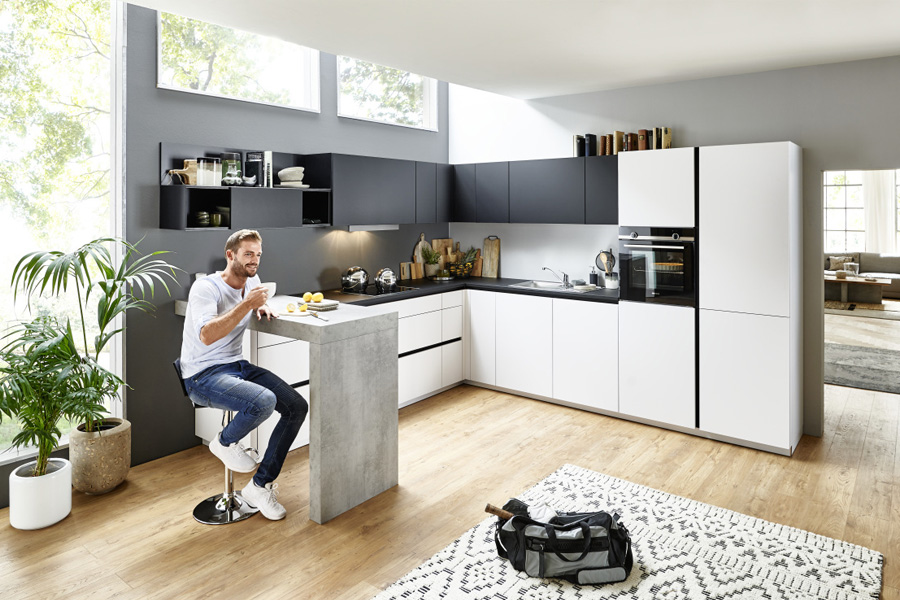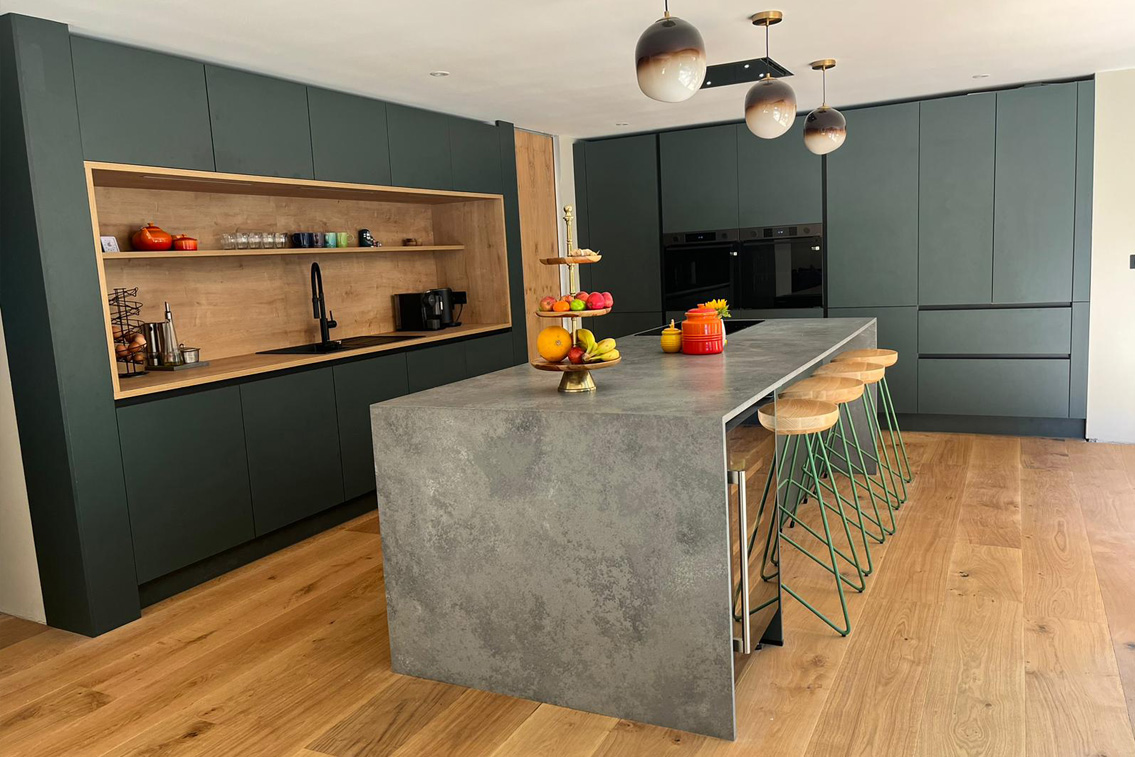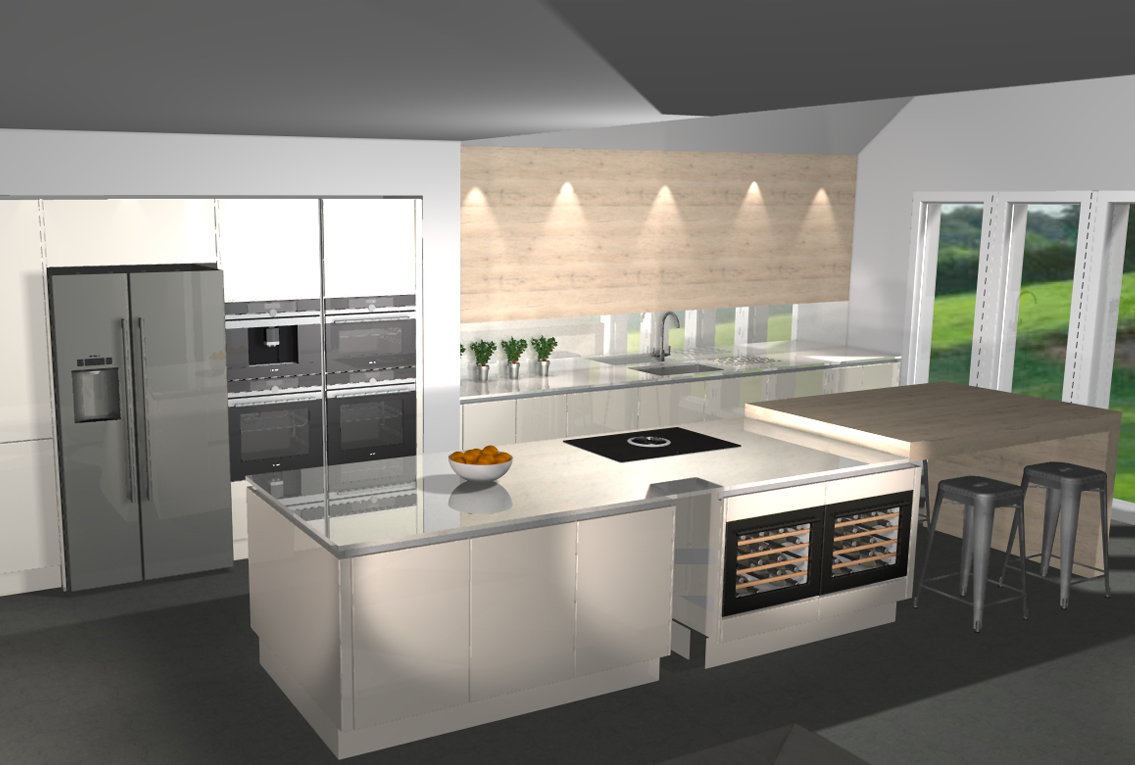



White kitchens are entirely livable, but reward daily habits rather than miracle products. The real secret is prevention: ventilation, protecting cabinets from sunlight, and fast cleanup matter more than any cleaner.
A freshly finished white kitchen can look flawless in photos, then show fingerprints and scuffs within weeks. White cabinets bounce natural light, open up smaller spaces visually, and create a bright backdrop for wood, metal and stone – a pairing seen throughout our kitchen collections.
The flip side is just as real: white highlights every coffee drip and greasy fingerprint, so neglect shows far more than in a darker kitchen. A white kitchen stays fresh with realistic routines – not constant scrubbing or banning cooking and children from the room.
Concrete culprits make white cabinets look tired: grease, UV light, heat and contact. Cooking grease and steam settle as a film on doors above the hob. Sunlight from south- or west-facing windows can yellow doors over years if unprotected, heat from ovens and air fryers under upper cabinets fades finishes, and hands, kicked base units and bins add everyday wear.
Painted wood, thermofoil and laminate react differently to heat, moisture and harsh cleaners, which matters when choosing how to clean each surface. If you’re considering timber cabinetry, it’s also worth reading our guide to wood veneer kitchens to understand how veneer should be maintained to preserve its natural finish.
Short, consistent habits do far more than occasional marathon scrubbing.
Deep cleaning doesn’t need to swallow a weekend if broken into small tasks. Weekly, wipe cabinet faces with warm water and dish soap, focusing on cabinets near the hob and fridge handles. Monthly, pull small appliances forward, wipe side panels and baseboards, and check grooves for trapped residue with a soft toothbrush – plus a quarterly check on caulk and grout.
The goal is lifting grease without dulling white surfaces. Basics include dish soap, white vinegar, baking soda and hydrogen peroxide, paired with microfibre cloths and an old toothbrush for crevices. A gentle baking soda paste lifts greasy spots with circular motion – avoid scouring powders, steel wool and strong bleach, which etch or yellow white surfaces, and test a new cleaner on a hidden area first. If you’re planning a new kitchen and want a surface that naturally hides fingerprints and everyday marks, see /news/what-is-fenix-and-why-are-so-many-designers-specifying-it/.
Sinks, worktops and grout often stain first, making even spotless cabinets look dingy.
For an enamelled sink, lay paper towels soaked in diluted bleach along the basin for twenty minutes, then rinse; club soda and lemon juice work for lighter marks. On laminate worktops, a baking soda and detergent paste scrubbed with a firm brush lifts stains – wipe residue away promptly. Blot spills on natural stone immediately with stone-safe cleaners. For tile and grout, a baking soda and vinegar paste worked in with a toothbrush keeps things bright, and sealing grout annually slows staining.
Small choices extend the life of white cabinets. Light-filtering blinds or window film protect cabinets that catch afternoon sun, and running the range hood when frying – filter cleaned every few months – keeps grease from settling. Clear door bumpers, felt pads and soft-close hinges reduce chips, washable runners protect base cabinets from splashes, and small habits – a dark tea towel near the hob, a splatter screen when frying – do much of the work.
Smart decisions at remodel time reduce mess. Pairing white uppers with medium-tone wood or darker lowers hides scuffs while keeping an airy feel, and a slightly warm white paint reads less clinical than a stark blue-white. This is easiest within a properly planned How to Plan a Kitchen Layout That Actually Works for Your Life, since colour, hardware and traffic flow depend on each other.
Brushed metal hardware shows fewer fingerprints than polished chrome, and if drawn to a fully flush look, it’s worth reading how handleless kitchens perform day to day first. Open shelving or a patterned backsplash break up large expanses of white, seen across many real kitchen transformations.
Even careful homeowners face chips or stains cleaning can’t fix. Minor nicks suit touch-up paint, while widespread yellowing on solid wood often calls for a full repaint. Replacement makes sense when thermofoil doors swell, laminate cracks, or moisture damage recurs under the sink – at which point booking a free kitchen design consultation is a sensible next step.
Well-maintained white cabinets support a stronger resale price, while visible damage does the opposite. Our ex-display kitchens are worth a visit to see how well-kept white finishes hold up in person, and it’s worth budgeting for occasional maintenance too.
A white kitchen will never look showroom-perfect around the clock with cooking, children, pets and guests – and it doesn’t need to. Redefine “clean” as sanitary and tidy rather than spotless, and let the household share the load. White kitchens aren’t inherently high-maintenance once small routines and forgiving finishes are built in from the start – many German kitchen ranges, including our bespoke German kitchens, are designed with this in mind. The point is to enjoy cooking and gathering, not fear every spill.
A few practical questions beyond the routines above.
White cabinets don’t attract more dirt – they simply reveal what’s there, which is healthier: you notice grime before it builds up.
Daily five-to-ten-minute resets, a weekly cabinet wipe-down, and a thorough deep-clean every one to three months, depending on cooking frequency.
A durable satin, semi-gloss or specialist cabinet enamel resists moisture and wipes clean more easily than a flat or matt paint.
Yes – washable paints, durable materials, darker lower cabinets, and wiping at kid height each evening make it manageable.
Start with a thorough degrease, then check whether the discolouration is surface-level or in the finish. Options from there are professional cleaning, repainting, or replacement.