


The main decision for kitchen doors today is often matt vs gloss. Matt suits busy family homes and larger, well-lit rooms – it hides fingerprints and offers a soft, consistent finish. Gloss, especially high gloss units, works best in small or darker kitchens, reflecting light to make the space feel bigger and brighter. Neither is better overall: it depends on kitchen size, light, style, and how much cleaning you’re willing to do, whatever kitchen transformations you’re planning. Mixing matt base units with gloss wall cabinets gives the benefits of both.
Matt doors are low-sheen, light-absorbing surfaces with strong colour depth and a velvety feel. Gloss doors, including high gloss cabinets, are reflective and light-boosting, suited to contemporary interiors. The key differences come down to light reflection, maintenance, visible fingerprints and scratches, and the sense of space – covered ahead alongside children and pets, open-plan rooms, north-facing kitchens, and resale value.
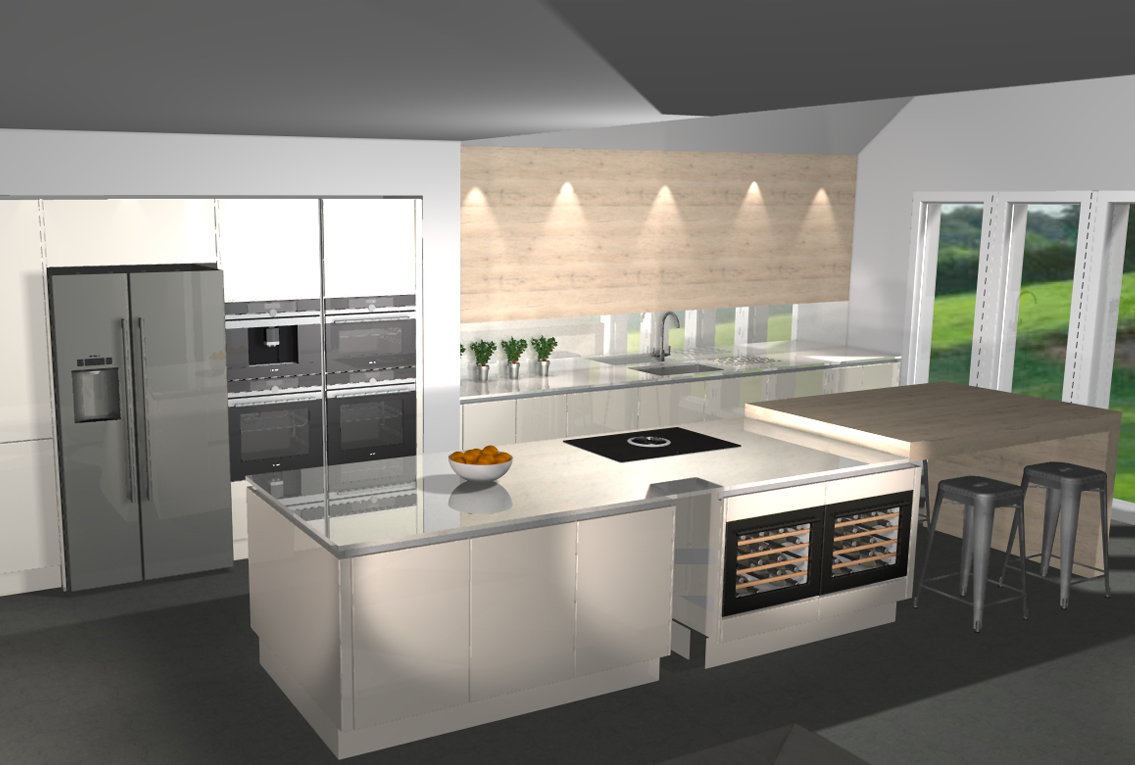
Gloss kitchen doors have a shiny, reflective surface, usually lacquered MDF, acrylic, PVC or gloss laminate. High gloss units bounce light around the room, often making compact kitchens feel bigger. Gloss finishes range from standard to ultra-gloss, and gloss cabinets are most often slab or handleless. The sheen can intensify colour depth, making whites crisper and bold colours more dramatic. Many German kitchen ranges are manufactured to an exceptionally high factory finish, though strong window light can create visible “hot spots”.
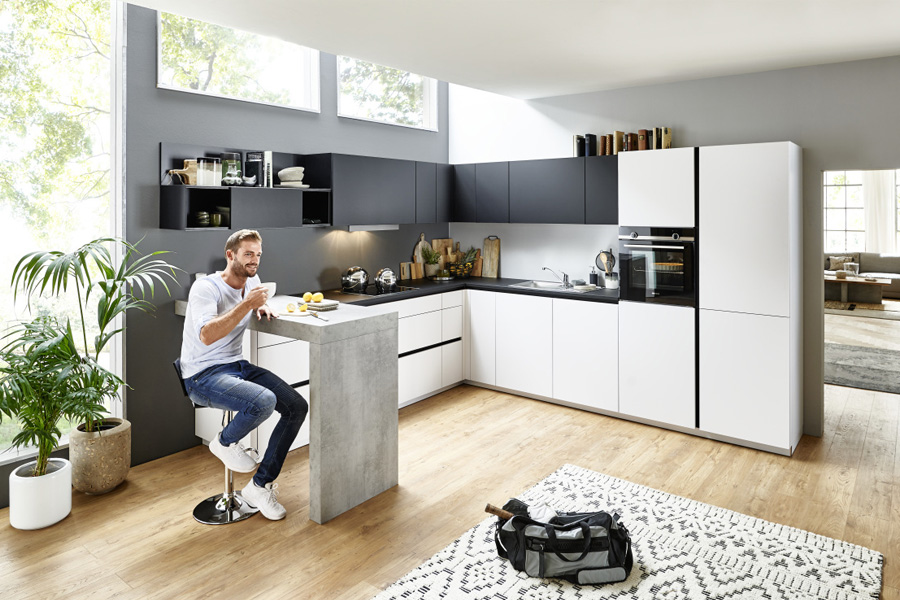
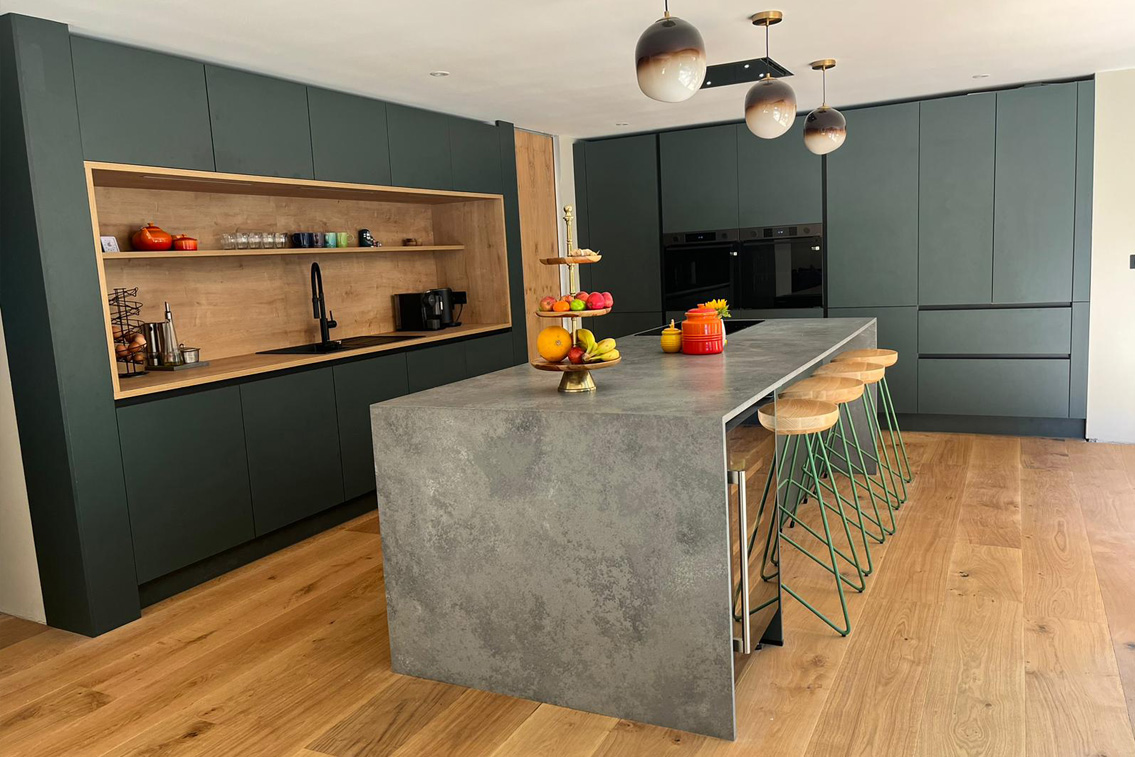
Matt doors have a low-sheen, light-absorbing surface in finishes such as matt lacquer, laminate or soft-touch acrylic, showing a smooth, consistent colour from most angles with no glare. Modern matt finishes – particularly those found in bespoke German kitchens and premium Italian designs – often feature anti-fingerprint and easy-clean coatings, making them far more practical than older matt doors. The tactile, velvety feel is a big part of matt’s appeal, working on slab doors, handleless kitchens, and detailed styles like Shaker or in-frame cabinetry.
Matt doors have a low-sheen, light-absorbing surface in finishes such as matt lacquer, laminate or soft-touch acrylic, showing a smooth, consistent colour from most angles with no glare. Modern matt finishes – many from bespoke German kitchens and Italian manufacturers – often feature anti-fingerprint and easy-clean coatings, far more practical than older matt doors. The tactile, velvety feel is a big part of matt’s appeal, working on slab doors, handleless kitchens, and detailed styles like Shaker or in-frame cabinetry.
Matt gives a consistent finish and solid colour depth – deep green, charcoal and navy look richer and architectural. Fingerprints and scratches are far less visible than on gloss, and matt suits classic and contemporary styles, pairing well with timber, stone and brushed metal. It reduces glare in open-plan spaces, and works well alongside the clever kitchen storage solutions built into handleless base units. On the downside, matt absorbs light, so small kitchens can feel flatter, some finishes hold onto greasy residue, and cheaper matt laminates can chip if knocked.
Finish choice changes how big your kitchen feels and how colours read. Gloss bounces light around, brightening dark corners and making galley or L-shaped layouts feel more open, while matt works best with plenty of natural or layered light. Gloss makes pale tones look crisp and airy, while matt makes deeper tones look richer – worth bearing in mind alongside a kitchen colour you won’t regret in five years . Matt gives a more consistent finish from different angles; gloss can look lighter or darker by angle, so test both against your lighting first.
Everyday life – kids, pets, cooking habits – should drive the decision as much as style. Gloss on base units and handles shows fingerprints and splashes fastest, so households that cook daily need a quick wipe-down routine; pale gloss shows fewer smudges than dark gloss. Matt disguises everyday smears better, suiting busy families or rentals where constant polishing isn’t realistic. Use microfibre cloths, avoid scouring pads, and clean spills quickly – factory-finished doors keep their finish longer than hand-painted fronts.
Finish should align with the whole home’s style, not just the kitchen. Gloss suits ultra-modern, minimalist and handleless designs – flat-front doors, integrated handles, simple worktops. Matt pairs naturally with Shaker doors, panelling and warm timber accents, and lets you use bolder colours without the room feeling too much. Combining both – matt base units with white gloss wall units – balances warmth and brightness, whether you’re choosing between a kitchen island or a table . Browsing our kitchen collections shows both finishes side by side.
A few scenarios help narrow things down. In a small, low-light flat, high gloss or semi-gloss in light colours maximises brightness. In a large, open-plan diner with bifold doors, matt or ultra-matt keeps the room feeling calm – tying into How to Plan a Kitchen Layout That Actually Works for Your Life as much as door finish. For households with children or pets, matt on base units means fewer visible fingerprints. In a period property, matt in heritage tones suits best, and if selling within five to ten years, neutral gloss or matt appeals to most buyers. Visiting ex-display kitchens or booking a free kitchen design consultation shows how each finish behaves in real light.
Durability depends more on core material and quality than sheen, but matt usually hides fine scratches better than high gloss, where any damage is more visible due to the reflection.
Trends have shifted toward matt in recent years, but simple white or light grey gloss remains a safe, mainstream choice. Avoid bold or novelty gloss colours if worried about dating the kitchen; neutral gloss or matt ages better.
Yes – often using matt base units with gloss wall cabinets, or a gloss island against matt tall units. Charcoal matt base units with white gloss wall cupboards and a light quartz worktop is one reliable combination.
Gloss doors, especially in darker colours, show fingerprints more easily, but cleaning is usually quick with a soft cloth and mild cleaner. Handleless gloss cabinets, or lighter shades, reduce how often marks are noticeable.
Matt typically gives a more consistent finish, with little change in perceived colour under different angles. Gloss can look lighter or darker at different times of day as reflections from windows and spotlights shift.