


Handleless kitchens look stunning in showrooms and on Pinterest – but daily life in a busy UK home can feel less picture-perfect.
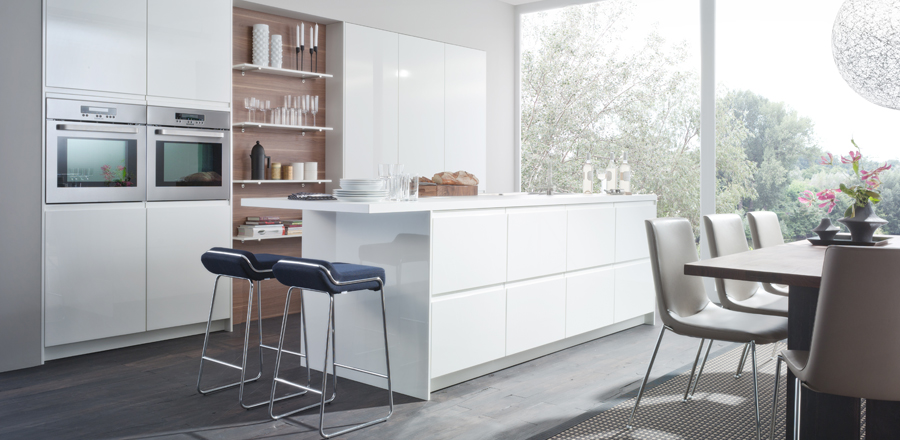
The appeal is easy to see: sleek cabinetry, no visual clutter, and a look that photographs beautifully. A handleless kitchen simply means flat fronts with continuous lines and no knobs, creating a sense of extra space – especially in open-plan layouts.
It’s easy to see why designers love specifying handleless kitchen design in new-build apartments and across our kitchen collections: clever lighting, integrated appliances and uninterrupted worktops combine to make it feel like the perfect kitchen – in theory. The rest of this guide tests how that survives busy family life.
“Handleless kitchen” is an umbrella term, and performance depends heavily on which mechanism you choose.
True handleless uses an aluminium rail, separate from the doors, for a completely flat front – the style most often seen in premium German kitchen ranges, with roots going back decades and a strong recent revival. J pull uses an integrated groove cut into the door – cheaper and easier to retrofit, though it can trap grease and crumbs. Push-to-open uses a touch-latch with no visible rail, but can spring open when bumped, especially around children or pets.
Hybrid designs are common too – true handleless on tall units, J pull on base – and a considered mix is often more practical than one system throughout.
The theoretical benefits are real; they don’t tell the full story.
This is where showroom beauty meets daily reality.
A firm grip inside a rail or groove can be awkward with long fingernails or weaker hands. Hygiene matters too: crumbs and grease collect in the recessed rail, needing more regular detailing than most expect.
Glossy handleless doors, especially in dark colours, show fingerprints far more than traditional handles, which is why many homeowners weigh up matt versus gloss finishes before committing. Push-to-open brings its own quirk: toddlers, pets, or a bumped knee can trigger it, and in an older home a purely handleless kitchen can look clinical unless softened with texture.
Handleless kitchens often sit at a higher price point than comparable handled kitchens, for reasons not obvious from the brochure – extra rails, more complex engineering, and stronger hinges for heavy doors.
J pull tends to be the more budget-friendly option, true handleless a premium, and push-to-open adds cost across a whole run. Fitting matters too: rail lines need perfect alignment, and low-skill installation can mean doors catching – good reasons to book a free kitchen design consultation before committing.
Retrofitting standard handles onto a handleless kitchen is rarely straightforward and may mean replacing doors, so it’s worth thinking about resale appeal – will a future buyer want a minimal look, or something softer?
A few practical choices keep the aesthetic benefits while reducing the downsides. Mixing systems works well – true handleless on tall units, J pull or discreet bar handles on heavy pan drawers.
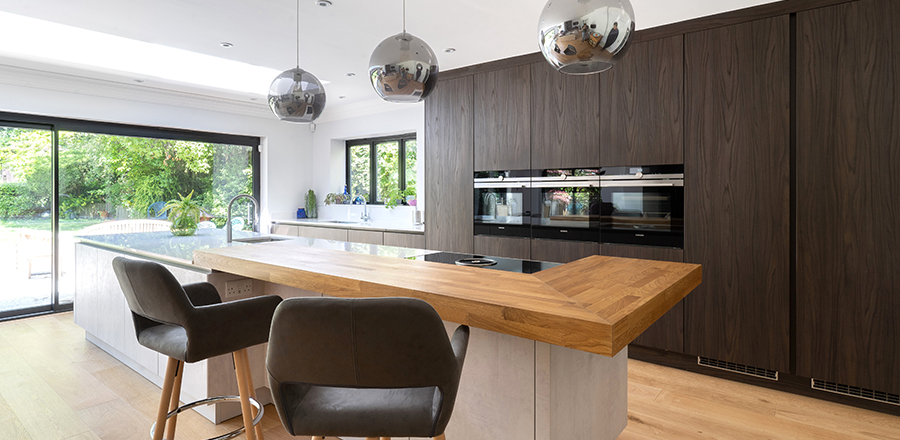
Ultra-matt doors in pale grey, stone or sage green hide fingerprints far better than dark gloss. Pairing handleless fronts with texture – wood veneer doors, stone-look worktops, open shelving – helps avoid a clinical feel, the kind seen in many recent kitchen transformations.
Layout tricks help too: use handleless only on the most visible run, keeping traditional handles in a pantry or utility room where practicality matters most.
Handleless kitchens can be genuinely brilliant in some homes and frustrating in others, so it’s worth an honest self-assessment. Do you cook daily or mostly at weekends? Any young children or mobility considerations at home?
They suit design-conscious homeowners who value a calm, minimal look and appreciate timeless design – a decision best made after How to Plan a Kitchen Layout That Actually Works for Your Life, since layout shapes how much the handle style will actually matter. Enthusiastic cooks or multi-generational households may be better served by a hybrid setup.
The best way to decide is to test real kitchens in person: open loaded pan drawers and larders across true handleless, J pull and push-to-open styles in our ex-display kitchens. A handleless kitchen is not a design mistake – it succeeds only when matched carefully to the right home, much like any bespoke German kitchens project.
Day-to-day practicalities not fully covered above.
Flat door faces are easy to wipe, but rail channels and J pull grooves do catch crumbs near the hob. A daily wipe of fronts, with weekly attention to the rails, is usually enough. Ultra-matt and mid-tone colours show fewer marks than dark gloss. For more practical cleaning tips, see keeping a white kitchen clean.
It depends on the system. Adding handles to flat push-to-open doors is usually possible, but drilling into J pull or true handleless doors looks awkward, since the door and profile are designed together. If unsure, choose a style that would suit simple handles later too.
Internal cabinet volume is almost identical – the benefit is really about clearance in narrow walkways. Removing 30–40mm of handles can mean bumping your hip versus sliding past comfortably. For genuinely more storage, pair handleless fronts with pull-out larders or drawer dividers.
There are no protruding handles at child head height, reducing bruises and snagged clothing, though children can still open low doors via the rail. Push-to-open can be too easy for toddlers to trigger, so families often prefer true handleless or J pull with child locks on cupboards.
Despite looking contemporary, handleless kitchens have roots in mid-century German design and stayed popular through several style cycles. Glossy, high-contrast schemes tend to date faster than softer, matt finishes, so a calm palette reads as timeless rather than a passing trend.