


If you’re comparing a German-made kitchen against a typical UK high street range as part of your bespoke kitchen design plans, the differences go far beyond price tags and showroom finishes. The real distinctions sit in how each kitchen is built, how long it lasts, and what’s actually behind the doors. This guide strips away the marketing language around “German engineering” and “handmade British” to look at carcass construction, hardware, design flexibility, and total cost over time.
Since around the early 2000s, German kitchens have become a popular alternative to mainstream UK high street and British kitchens – the familiar names found on retail parks up and down the country. What started as a niche choice for design-conscious homeowners has grown into one of the most common questions we hear during early consultations: is it worth paying more for a German kitchen, or does a British high street range do the job just as well?
It helps to be clear about terms from the outset. A “German kitchen” typically refers to cabinetry manufactured in Germany by brands such as Nobilia, Schüller, Häcker, or Nolte, built in large automated factories to order. A “high street kitchen” usually means a UK shed or chain retailer’s range – often flat packed, mass-produced, and sold from stock in standard sizes.
Part of the confusion for homeowners comes from marketing: claims about “German manufacturing”, “handmade British”, and “exceptional value” often pull in different directions at once. This guide strips that back and focuses on the details that actually matter – carcass thickness, back panel construction, hardware, and installation – rather than vague “premium feel” language.
The core question is simple: how is each kitchen actually made? Most German kitchens are made-to-order in large, highly automated factories, while many high street kitchens in the UK are mass-produced into stock in a limited set of sizes.
German manufacturing lines build each kitchen as a single, complete project – every cabinet drilled, edged, and assembled for one specific client, with the order barcoded and tracked through the factory for quality control at each stage.
Compare this with a typical high street kitchen retailer, where carcasses are produced in bulk, held in UK warehouses, and then picked to “fit” a customer’s plan using only standard sizes and filler panels to bridge the gaps.
This difference in production philosophy is largely why German kitchens often achieve tighter tolerances, cleaner alignment, and more consistent gaps between doors – especially noticeable on long runs and tall banks of units.
This is one of the most important sections of this comparison, because the differences here are specific, visible, and measurable – not just a matter of taste.
Carcass thickness and density matter more than most buyers realise. Some high street brands use 15–18mm chipboard, while quality German kitchens typically use 19mm high-density boards. That extra density improves screw-holding power, rigidity, and the ability to carry the weight of stone worktops without sagging.
Back panel construction is another telling detail. Many high street units rely on thin 2–3mm hardboard backs, tacked or slotted into place. German carcasses typically use around 8mm solid back panels that are glued and screwed, which keeps the whole unit perfectly square – both in transit and once it’s loaded with crockery and pans.
Hinges and runners tell a similar story. German kitchens generally use branded hardware such as Blum or Hettich, with integrated soft-close and tested weight limits of 40–70kg for pan drawers. Cheaper flat pack ranges often use lighter-duty runners rated around 20–30kg.
In daily use, these details show up as smoother soft-close action, doors that stay aligned years later, and drawers that don’t sag under a full load of pans – small things that add up over a decade of daily use.
Flat pack and rigid-built are the two main construction methods you’ll come across, and the difference affects both installation and how the kitchen ages.
A flat packed kitchen – common among British high street retailers and DIY sheds – arrives as boxes of panels, fittings, and fixings, assembled on site by the installer. Assembly quality can vary considerably depending on the fitter’s time, skill, and the conditions on site that day.
Rigid, factory-assembled carcasses, more typical of German kitchens and some higher-end British makers, arrive glued, dowelled, perfectly squared, and braced – often with feet, and sometimes even doors or drawers, pre-fitted. This speeds up installation and removes much of the room for error.
How long does a new kitchen take from design to installation? The answer depends on the manufacturer, the complexity of the project, and installation requirements. Factory-built German kitchens are typically made to order, so they may have longer lead times than stock high street ranges, but the faster, more precise installation process can help keep the overall project on schedule.
Structurally, a rigid, glued carcass with a solid back panel generally resists racking or twisting better over time than a screw-together flat pack box, particularly under the stress of daily opening and closing.
It’s worth weighing cost against time here too: flat packed units can look cheaper on the initial quote, but often require more labour hours to assemble and adjust on site, which can quietly erode the saving you thought you were making.
Style is where most people start their search, so it’s worth comparing German kitchen design language with what’s typically on offer from British high street brands.
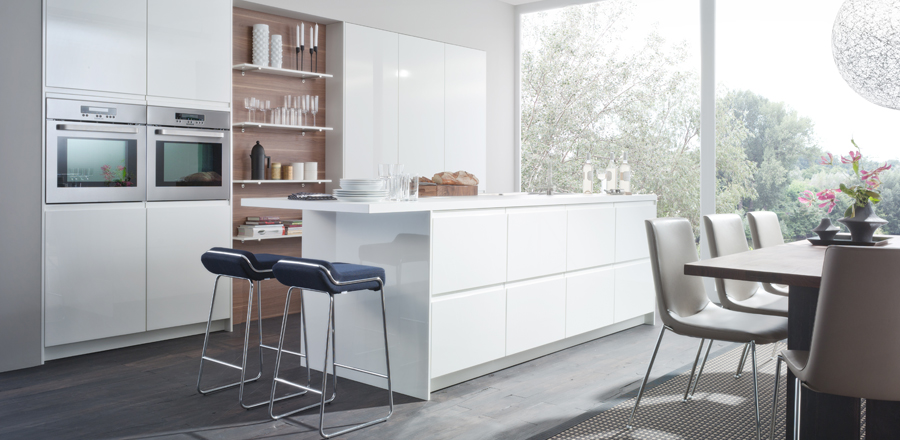
Classic German kitchens lean toward sleek, horizontal lines, handleless rails or integrated grips, matt or high-gloss lacquers, concrete effects, and wood décors. German brands tend to release new colours and finishes most years, keeping pace with interior trends.
British and high street styles more often mean painted Shaker doors, tongue-and-groove panelling, range cookers, open shelving, and traditional cornices – looks that suit period properties and anyone after a “country” feel.
It’s worth being clear that “German vs British” isn’t purely a style split. There are German ranges with classic framed doors, and British manufacturers producing ultra-modern, handleless designs. The real difference is usually what’s behind the doors, not the door style itself.
Beyond looks, it’s worth looking at how a kitchen works day-to-day – and this is where German kitchens are particularly well regarded for clever storage and ergonomic planning.
Typical German storage features include wide pan drawers, internal drawers behind doors, full-height pull-out larders, corner carousel or LeMans units, integrated waste management, and deep, adjustable wall units often around 350mm deep.
Many high street designs are still perfectly functional, but tend to rely more on traditional cabinets with shelves, narrower drawers, and more filler pieces, simply because of a more limited range of cabinet sizes.
There are ergonomic wins too. German units are usually taller – often 780–792mm base units with a lower plinth – which provides more internal storage and a more comfortable working height, especially for taller homeowners.
In practice, this can mean gaining an extra drawer line in a run of base units, or an extra shelf inside a larder, simply because the units themselves are taller – making a German kitchen feel more spacious without the room itself growing by a single millimetre.
These practical advantages are also worth considering if you’re asking, should I renovate my kitchen before selling my home? A well-designed kitchen with durable cabinetry, efficient storage and quality hardware is often more appealing to prospective buyers than one that focuses on appearance alone, making thoughtful design choices a worthwhile long-term investment.
A common assumption is that “German” automatically means more bespoke, and “high street” automatically means basic. The reality is more nuanced, and depends heavily on which specific British or German supplier you’re comparing – which is exactly why it pays to think in terms of bespoke kitchen design rather than brand labels alone.
German systems often offer a wide grid of cabinet widths, heights, and depths – base units in 150mm increments, multiple tall unit heights, and so on – giving designers room to avoid excessive fillers and make use of awkward niches.
Compare this with the most common high street offer, where a much narrower range of cabinet sizes usually means more spacers and filler panels, which can waste storage space and interrupt clean visual lines.
At the very top end, truly bespoke British kitchens made in smaller UK workshops can exceed both German and high street options for one-off sizes, curves, and unusual features – though typically at a different price level and lead time.
The practical takeaway is that “standard vs bespoke” isn’t a simple German vs British split. Whichever route you’re considering, ask any supplier about available cabinet sizes, height options, and whether units can be adapted to your exact room.
German kitchens usually cost more than entry-level high street or DIY flat pack ranges, but can land close to some of the better-known British brands once you compare like-for-like specifications. For a full breakdown of what drives kitchen prices and where your budget actually goes, see our guide, How Much Does a Bespoke Kitchen Cost? (A Honest Guide).
Lifespan is where the gap tends to show up most. A well-installed German kitchen with quality hardware and materials can comfortably last 15–20 years or more with only minor maintenance, while many cheaper high street kitchens start showing wear and functional issues around 7–10 years.
It’s worth thinking in terms of total cost of ownership rather than just the upfront price – repainting tired doors, replacing damaged panels, repairing failed hinges or runners, and potentially refitting an entire kitchen earlier if the boxes start to deteriorate all add up over a decade.
Perceived value and actual value aren’t always the same thing. A German kitchen may offer exceptional value if it avoids the need for a full refit within a decade, supports resale appeal, and makes daily life easier through better storage and ergonomics.
As a rough illustration, a mid-sized kitchen of 12–15 units from a high street brand and a similar layout from a German range can sit within a few thousand pounds of each other once delivery and basic installation are included – the extra budget for the German kitchen typically goes into carcass density, the back panel, drawer hardware, finish quality, and longer aftercare support.
For many homeowners, environmental impact and supporting local jobs matter just as much as price and style.
Reputable German manufacturers operate under strict EU and German regulations covering emissions, recycling, and sustainable forestry, often using PEFC or FSC-certified boards with low formaldehyde content.
There’s a genuine case for “buying British” too: shorter transport distances, support for UK manufacturing and trades, and easier communication with the factory if something needs tweaking years down the line.
Many British kitchen makers also source responsibly, use sustainable timbers, and design kitchens to last decades. The key is to ask any supplier for certifications and specific details, rather than assuming German or British is automatically the greener choice.
The most honest conclusion is a nuanced one: sustainability depends on build quality (a kitchen that lasts longer is inherently greener), shipping distances, material sourcing, and how often you end up wanting to replace or refresh the space.
There’s no single right answer here – the best choice depends on your lifestyle, budget, property type, and timeframe, and on how you’d define a successful bespoke kitchen design for your own home.
If you value ultra-clean lines, handleless fronts, long-term durability, and minimal maintenance, a German kitchen is likely to suit your priorities well.
A high street kitchen may be the better fit if you’re working to a lower initial budget, need quick availability, want a simple layout, or are fitting out a rental property where lifespan expectations are shorter.
Property style matters too. Modern apartments, new builds, and open-plan extensions often suit German kitchen design particularly well, while cottages, period terraces, and farmhouses can be perfect for British Shaker or in-frame styles.
Whichever direction you’re leaning, gather detailed quotes from both sides and look past the door samples – ask about carcass thickness, back panel type, hinge brand, warranty length, and whether units are flat packed or rigid before making a final decision.
For more detailed comparisons and planning advice, browse all articles on the Studio K Kitchens blog.
Not necessarily – it depends on which brands you’re comparing. Many German kitchens outperform entry-level high street flat pack options on build quality and lifespan, but top-end British bespoke kitchens can equal or exceed German ranges in craftsmanship and materials.
Yes. Several German manufacturers offer Shaker-style and framed-effect doors, so you can pair a classic look with German cabinet construction, soft-close hardware, and modern internal storage.
Typically, yes, though the gap is often smaller in practice than it sounds. Made-to-order German kitchens usually have lead times of around 6–10 weeks from sign-off, while stocked high street flat pack ranges can sometimes be supplied in 1–3 weeks. In real projects, installation schedules and builder timelines often even out this difference.
No. Not all flat packed kitchens are poor quality – some mid-range British and European brands use decent materials even in knock-down form. The real issue is board density, back panel strength, and assembly quality, rather than the simple fact that it arrives in pieces.
Estate agents in the UK frequently highlight “German kitchen” in listings because buyers associate the term with quality. While this doesn’t guarantee a specific price uplift, a well-designed, solidly built kitchen can help a home sell faster and avoid buyers mentally discounting the price for an imminent refit.
Whether you’re drawn to the engineering of a German system or the character of a British-made kitchen, the right choice comes down to your home, your budget, and how you actually want to live day to day. A short conversation with a designer can save you from comparing the wrong things.