


The kitchen worktop is the most used surface in the home, shaping daily cooking, entertaining, and long-term property value. In 2026, homeowners can choose from more kitchen worktop materials than ever – from natural stone and granite worktops to porcelain surfaces and advanced laminate worktops. This guide breaks the decision into lifestyle needs, material pros and cons, style, and budget and maintenance, so you can choose the right kitchen worktop with confidence. It’s worth getting right early: many of the bespoke kitchens we design are built around the worktop as much as the cabinetry, since it’s the surface you’ll touch every day.
Choosing the right worktop is only one part of a successful kitchen. It’s equally important to think about how to plan a kitchen layout that actually works for your life, ensuring your worktop, appliances and storage all support the way you cook, entertain and move around the space every day.
Lifestyle analysis should come before falling in love with a material or colour. Busy families dealing with spills at the island need different things from keen cooks using heat and heavy pans, entertainers wanting a statement island, or low-cook households more focused on looks than wear. List your real daily activities – weekend baking, batch cooking, kids’ crafts – and use that to prioritise stain, heat or scratch resistance, or simply ultra low maintenance. If you cook curries several nights a week, prioritise non-porous surfaces like engineered quartz or porcelain.
Choosing the right worktop is particularly important in a bespoke kitchen, where every element is selected to suit the way you cook, entertain and use the space.
No single kitchen worktop material is “best” – each has pros, cons and maintenance needs to weigh against your lifestyle. The table below summarises how the main options compare. If you hate the idea of sealing, for instance, steer away from most natural stone and towards a low maintenance option instead.
| Material | Durability | Heat Resistance | Stain Resistance | Maintenance |
| Engineered Quartz | Very high | Good (use trivets) | Excellent | Low – no sealing |
| Granite (Natural Stone) | Very high | Excellent | Good, with sealing | Medium – reseal 1–3 yrs |
| Porcelain / Sintered Stone | Excellent | Excellent | Excellent | Very low |
| Laminate | Moderate | Low | Moderate | Low, but joints vulnerable |
| Solid Wood | Moderate | Low (needs trivets) | Low, porous | High – regular oiling |
Made from around 90–94% natural quartz bound with resins and pigments, engineered quartz gives a consistent, non-porous, low maintenance surface. It resists stains well, needs no sealing, and comes in a huge range of colours and marble-like patterns – a strong choice for busy households wanting a premium look without much upkeep. The main caveats: prolonged direct heat needs a trivet, and deep chips can be hard to repair invisibly.
“Natural stone” covers granite, marble, quartzite and limestone, each slab unique. Granite worktops are hardwearing, heat resistant and visually striking, from deep blacks to salt-and-pepper greys. Most natural stone needs resealing every one to three years to maintain stain resistance, so it isn’t fully low maintenance. Marble and limestone suit careful cooks happy to accept patina over time, while quartzite is a tougher, more resilient option.
Porcelain and sintered stone surfaces are made by compressing and firing natural minerals into ultra-compact, thin yet strong slabs. They resist heat, scratches, UV and stains exceptionally well, and suit both indoor and outdoor kitchens, including islands and splashbacks. Porcelain can mimic marble, concrete or stone while staying almost maintenance free – though its hardness means it needs specialist fabrication, which can affect cost.
Laminate worktops use a decorative layer bonded to a chipboard-style core, available in stone, wood and concrete effects. They’re affordable, install easily, and clean simply for light to moderate use. The trade-offs are lower heat and impact resistance, visible joints on long runs, and a risk of water damage if joins aren’t protected – a sensible starting choice for a first renovation.
Solid wood – oak, walnut or beech – brings warmth and character, especially in classic or Scandinavian kitchens, but needs regular oiling, protection from standing water, and trivets, making it a poor fit if you want truly low maintenance worktops. Stainless steel suits professional-style kitchens, while composite or acrylic surfaces allow seamless sinks and sculptural designs – both better suited to a specific design vision than a one-size-fits-all solution.
Once you’ve shortlisted materials, aesthetics become key to a cohesive design. Neutral colours – white, cream, soft grey, taupe – work with most cabinet styles and date less, while bold tones like black or deep green create drama in contemporary spaces. Plain or subtly patterned surfaces suit busy floors or splashbacks, while strong veining adds presence on its own. Polished finishes reflect more light but show fingerprints; honed or textured finishes hide marks better.
Think about how the worktop bridges your floor and wall cabinets: pairing dark cabinets with a lighter worktop helps a small room feel open, while a darker, patterned top can anchor a large, bright space. North-facing kitchens often benefit from lighter, slightly glossy surfaces, while sun-drenched rooms can handle matt or textured finishes. A veined engineered quartz that echoes marble, paired with oak flooring and off-white cabinets, is a reliable formula for a timeless, soft-modern look.
If your renovation also involves reconfiguring the space, it’s worth considering Open Plan Kitchen Design: What to Consider Before Knocking Down That Wall. Natural light, sightlines and how your worktop connects with adjoining living areas can all influence which material, colour and finish will work best in the completed design.
Understanding real-world maintenance avoids disappointment a few years on. Typical wear includes stains from wine and spices, micro-scratches from chopping, heat rings, and dulling from abrasive cleaners – materials respond very differently. Natural stone needs a sealing schedule; quartz and porcelain need little more than a daily wipe; laminate and wood need gentler cleaners and a watchful eye on standing water. Many engineered quartz and porcelain brands in 2026 offer extended or lifetime warranties if you follow their care guidelines.
Truly low maintenance worktops – engineered quartz, most porcelain, some sintered options – mean no sealing and a simple wipe-clean routine. Hands-on surfaces like natural stone, wood and high-gloss laminate trade that convenience for extra character and patina, in exchange for more frequent care and avoiding harsh cleaners or direct cutting. Be honest about how much time you’re willing to spend preserving the look.
Worktop cost in 2026 varies by material, thickness, edge profile, cut-outs and installation complexity, often forming a major part of the kitchen budget. Broadly, laminate sits at entry-level, engineered quartz and many granites at mid-range, and porcelain or exotic stones at the premium end. When comparing quotes, make sure fitting, templating, joins, cut-outs and splashbacks are all included, so you’re comparing like with like. If you’re still finalising your layout alongside the worktop, our guide, How to Plan a Kitchen Layout That Actually Works for Your Life , covers how counter space fits the bigger picture.
Order physical samples and view them in your own kitchen alongside cabinet and flooring samples, checking how colours shift through the day under different light. Visit at least one showroom or stone yard to see full slabs, since small samples rarely reveal veining, movement or gloss level accurately. At home, place samples near appliances and test how visible crumbs, water spots or fingerprints are, and how easily they wipe clean. Live with your favourites for a few days before committing.
With proper installation and care, granite, engineered quartz or porcelain can easily last 15–25 years or more, while laminate and wood typically have a shorter lifespan depending on use.
Often, yes – worktops take heavy daily wear and strongly shape the room’s look, so a healthy share of budget on a durable, well-fitted surface usually beats over-spending on decorative cabinet extras.
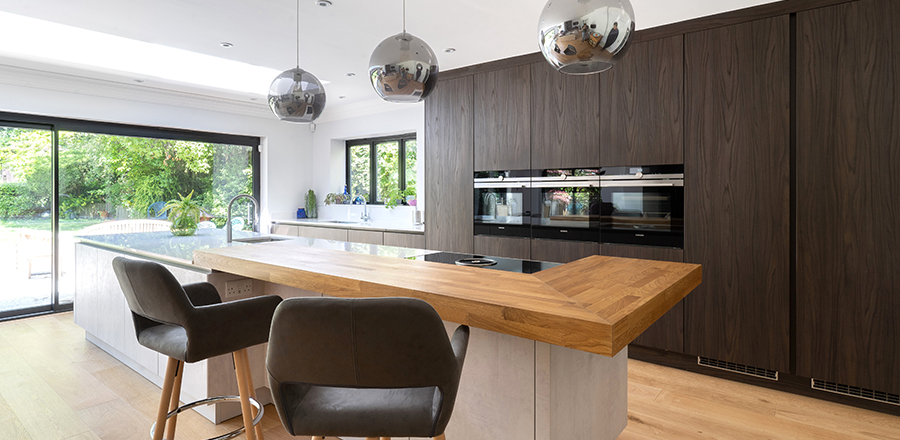
Yes – a robust quartz on the main runs paired with a warmer wood top on a breakfast bar is a popular way to balance function, style and cost, provided colours and finishes are coordinated.
Many ultra-compact porcelain and sintered stone slabs are engineered to be very strong even at thin profiles, but they need correct support, professional installation, and careful handling at the edges.
If you’re likely to move within three to seven years, focus on neutral worktops such as light engineered quartz or subtle granite – they help future buyers picture their own style and can support resale value.
The right worktop should fit how you actually live, not just how it photographs on day one. Our team at Studio K Kitchens helps clients choose and fit worktops as part of fully bespoke kitchens, matched to your cooking habits and budget. Get in touch to book a design consultation, or browse all our articles for more planning advice.