


Choosing a kitchen colour feels like a simple decision until you are actually faced with it. The range of options available — from deep forest greens to warm off-whites, from slate greys to terracotta — is wider than it has ever been, and trends move quickly. The challenge is not finding a colour you love today. It is finding one you will still love in ten years. That is one of the key questions our team addresses during every bespoke kitchen design consultation, and it is worth thinking through carefully before you commit.
Colour trends in kitchens follow the same cycle as any other area of interior design — they emerge, peak, become overexposed and then either settle into classic status or fade into dated territory. The colours that tend to age well share a few common characteristics. They sit at the quieter end of the saturation spectrum. They work with natural light rather than against it. And they function as a backdrop rather than a statement, allowing other elements of the kitchen — worktops, handles, flooring, lighting — to carry the personality of the space.
Heavily saturated or highly specific trend colours carry more risk. A deep cobalt blue or a bright sage green might feel exciting now, but both are closely associated with a particular moment in interior design history, which means they can start to feel dated faster than neutral alternatives. The wider direction kitchen design is moving in 2026 reinforces this — the move is firmly towards warmth and quieter palettes rather than statement colour.
Warm whites and soft off-whites have the longest track record of any kitchen colour category. Shades like warm ivory, aged linen and soft chalk have remained consistently popular across decades because they work with almost every worktop material, flooring choice and hardware finish. They read as clean without being clinical, and they age gracefully as a home’s other finishes evolve.
Greyed-down neutrals — colours that sit between grey and greige, or between grey and a very muted green — have demonstrated strong longevity since they entered mainstream kitchen design. The key is choosing a tone that has enough warmth to avoid feeling cold. A grey that reads as purely cool can feel stark in low light.
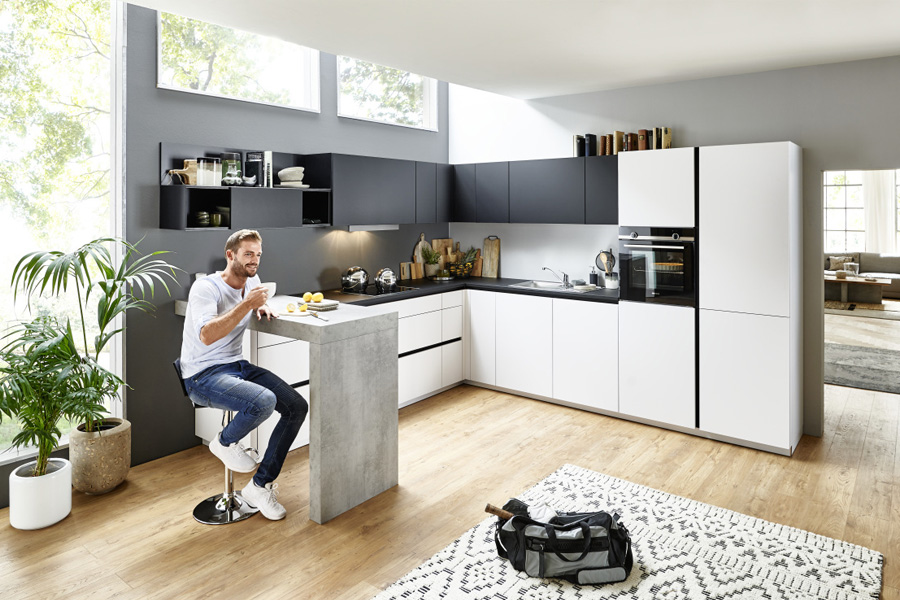
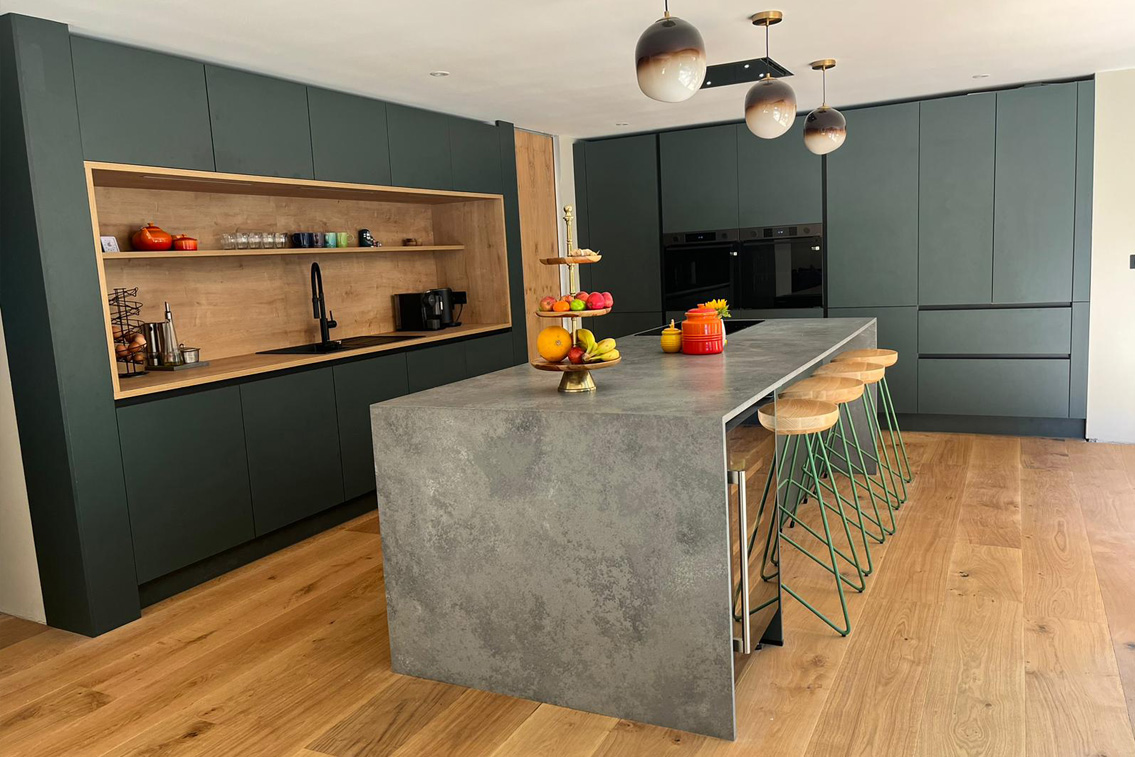
Deeper tones such as navy, bottle green and charcoal can work well on lower cabinets or kitchen islands, particularly when paired with lighter upper cabinets. Used sparingly and with care, they add weight and sophistication without overwhelming the space.
The orientation of your kitchen matters more than most people realise. A north-facing kitchen receives cooler, flatter light throughout the day. Warmer undertones in your chosen colour will help counteract this. A south-facing kitchen with plenty of natural light can handle cooler tones more comfortably.
The size of your kitchen also affects how colour reads. A colour that feels grounded and sophisticated in a large open-plan kitchen can feel heavy and oppressive in a smaller galley layout. Always look at colour samples in the actual space, at different times of day, before making a final decision. This is one of the areas where the commonly repeated kitchen design rules are worth questioning — the advice to “go light in small kitchens” is often too blunt to be useful.
Think about the other fixed elements in your home — flooring, wall colours in adjoining rooms, staircase finishes — and how your kitchen colour will sit alongside them. A kitchen does not exist in isolation. It connects to the rest of your home, and the transition between spaces should feel considered rather than jarring.
One of the genuine advantages of working through a bespoke kitchen design process is that colour selection does not happen in isolation. It is considered alongside cabinetry profile, worktop material, handle choice, lighting and layout. When all of these elements are resolved together, the colour decision becomes much clearer — and much less likely to be one you regret.
Our designers at Studio K have worked through hundreds of colour decisions with homeowners across the UK and have a clear sense of what performs well over time and what does not. Premium finishes are difficult to swap later, so getting your budget right at the planning stage matters — colour and material decisions are interlinked, and the strongest finishes typically sit at the higher end of the budget.
A confident colour decision is part of what makes a kitchen feel resolved rather than assembled. That kind of resolved outcome is at the heart of every bespoke kitchen design we deliver.
If you are at the colour selection stage of your kitchen project, a conversation with our team is the most useful next step. Contact Studio K Kitchens to book a consultation at either of our UK showrooms.