


Kitchen design advice is everywhere. From interior magazines to social media to well-meaning family members who redid their kitchen three years ago, everyone has a view on what you should and should not do. The problem is that some of the most repeated pieces of advice are either outdated, misapplied or just wrong. When you are planning a significant investment in your home, knowing which rules to follow and which to question is genuinely useful. It is one of the areas where working through a proper bespoke kitchen design process makes the biggest practical difference.
This advice made sense when kitchen design was less sophisticated and the safest option was always to stay tonal. Today it tends to produce kitchens that feel flat and one-dimensional. The most compelling kitchens almost always involve some contrast — between cabinet colour and worktop material, between door profile and hardware, between matt and gloss finishes. Learning to use contrast confidently is one of the marks of a well-designed kitchen. The goal is not to match everything. It is to create a visual hierarchy that feels intentional. This is closely tied to how you approach colour selection more broadly — confident contrast and confident colour choice usually go together.
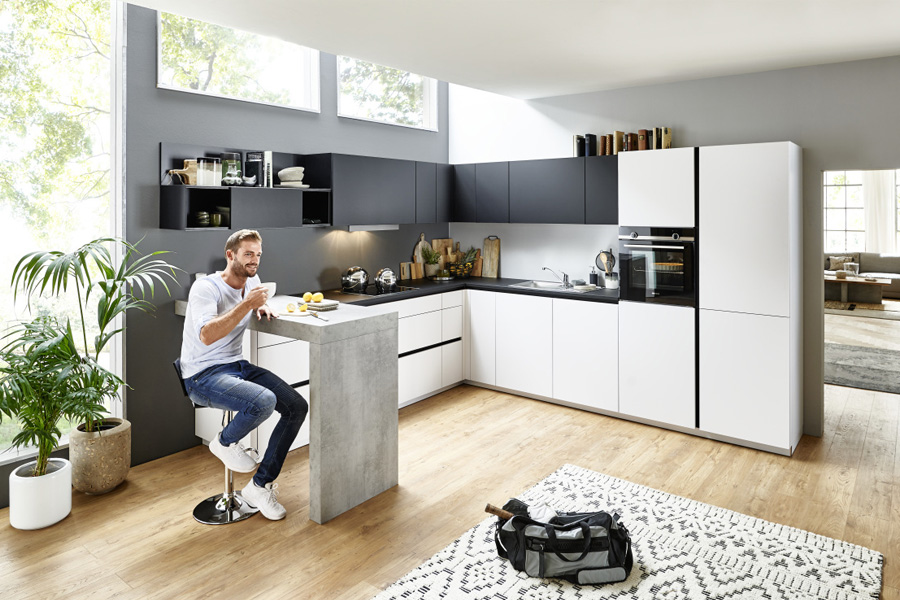
The shift towards open-plan living was one of the defining trends of the last two decades, and for many households it genuinely works well. But it is not universally better. A kitchen that is separated from the main living space offers distinct advantages — cooking smells stay contained, noise from cooking does not compete with conversation or television, and the kitchen can feel like its own considered room rather than a functional corner of a larger space. If your current layout is open plan and you find yourself wishing for more separation, you are not alone and you are not wrong.
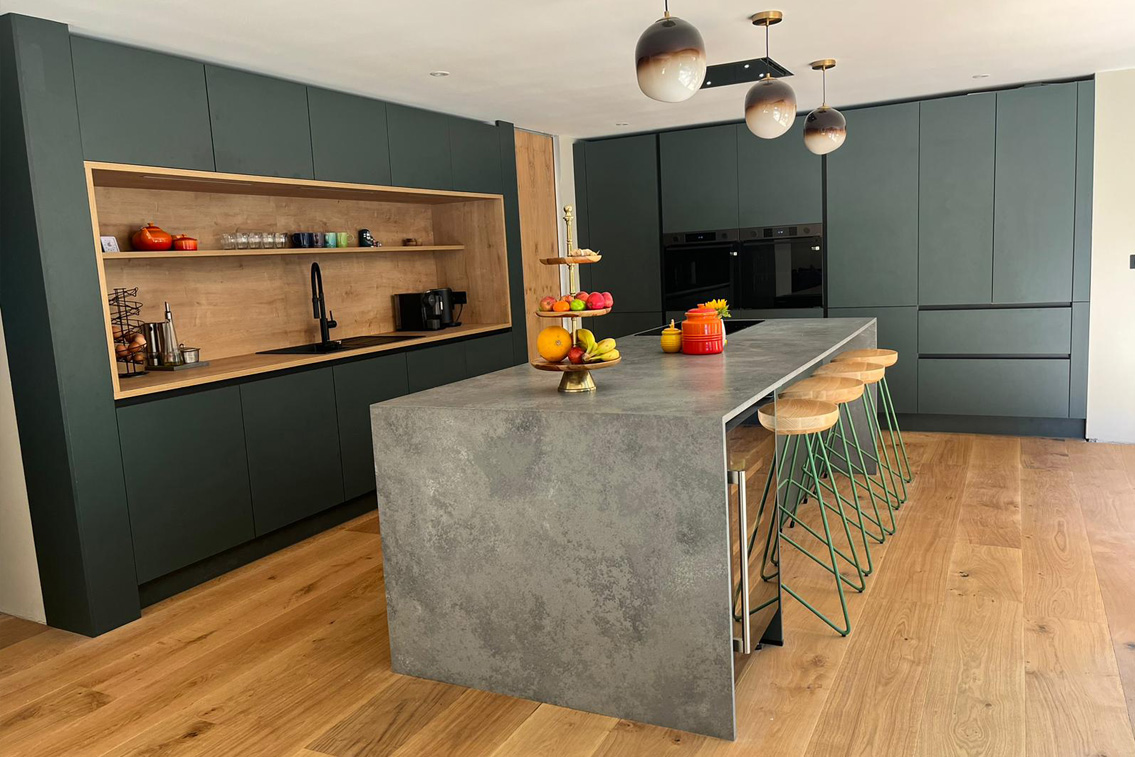
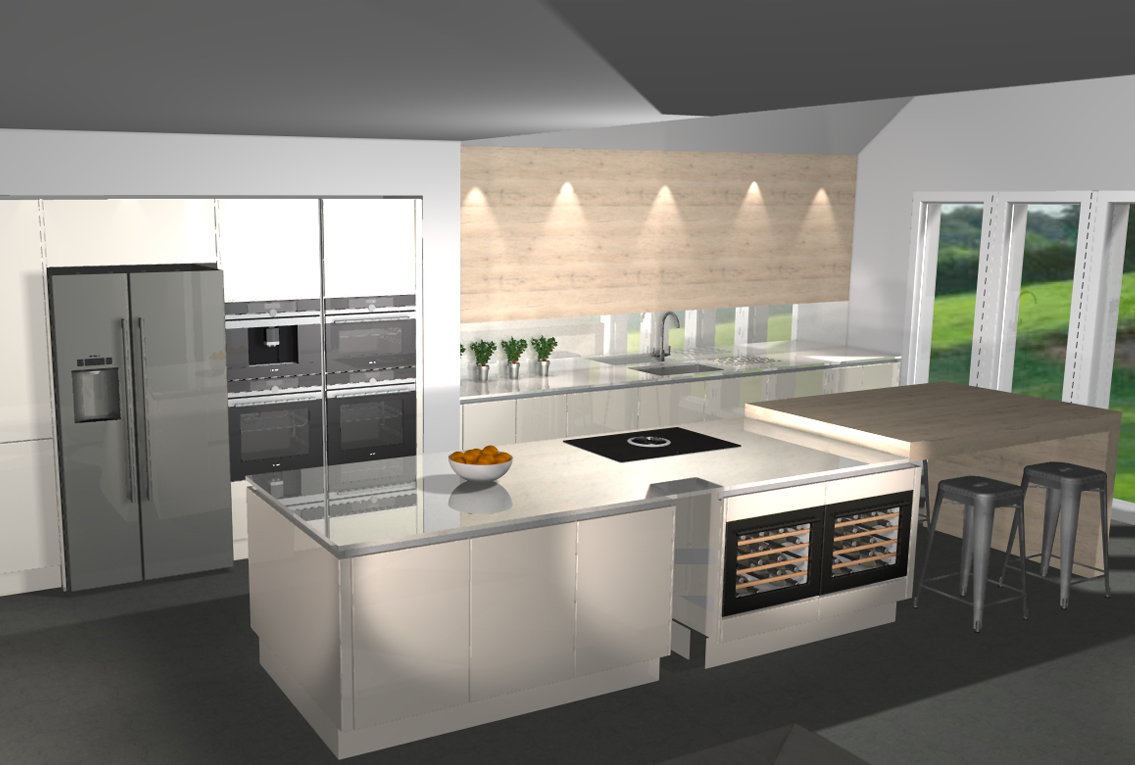
Kitchen islands have become so central to aspirational kitchen design that many homeowners assume they are a prerequisite for a good kitchen. They are not. An island works brilliantly when the kitchen has enough floor space to accommodate it without compromising circulation. The standard guidance is that you need at least 1.2 metres of clear walkway on each side of an island for it to function comfortably. In many UK kitchens, that space simply is not available. A well-designed peninsula, a run of base cabinets or even a freestanding table will serve the same function better in a tighter space.
Storage is important, but more storage is not always better. Designing a kitchen around maximum cabinet coverage can produce a space that feels oppressive and difficult to move through. The more useful question is not how much storage you can fit in, but what you actually need to store and where it should logically live. Well-placed, well-designed storage that genuinely supports how you cook will outperform a kitchen stuffed with cupboards every time. This is also where investing in a bespoke kitchen design pays back — a good designer will challenge the assumption that more is automatically better.
The kitchen triangle — the idea that your sink, hob and fridge should form a triangle to minimise unnecessary movement — is a useful starting concept but it is not the whole picture. Modern kitchens are often used by more than one person simultaneously, and the triangle does not account for prep zones, serving areas, waste management or the increasing number of specialist appliances that feature in contemporary kitchen briefs. A good designer will use the triangle as one input among many, not as the organising principle around which everything else is subordinated. The direction kitchen design is heading in 2026 makes this even more important — multi-zone, multi-user kitchens are increasingly the norm rather than the exception.
Most of the rules above persist because they offer simple answers to genuinely complex questions. The trouble is that a good kitchen is not the product of following simple rules — it is the product of thinking carefully about how you actually live, then designing around that. Understanding which rules to apply and which to question is part of what makes bespoke kitchen design valuable, and it is also where getting the budget right at the planning stage matters — you only get this level of considered design if the brief and the budget support it.
If you are planning a new kitchen and want expert guidance on layout, storage and design, our team is here to help. Contact Studio K Kitchens to book a consultation at either of our UK showrooms.